
Compact HPL vs Corian, MDF and PVC
The choice is usually between five materials, and the brochures all say the same words. This compares them on the five things that decide it in a real building: what happens with standing water, what happens when a door gets kicked, what happens after two years of disinfectant, whether damage can be repaired, and what the whole thing costs over a decade rather than per square metre.
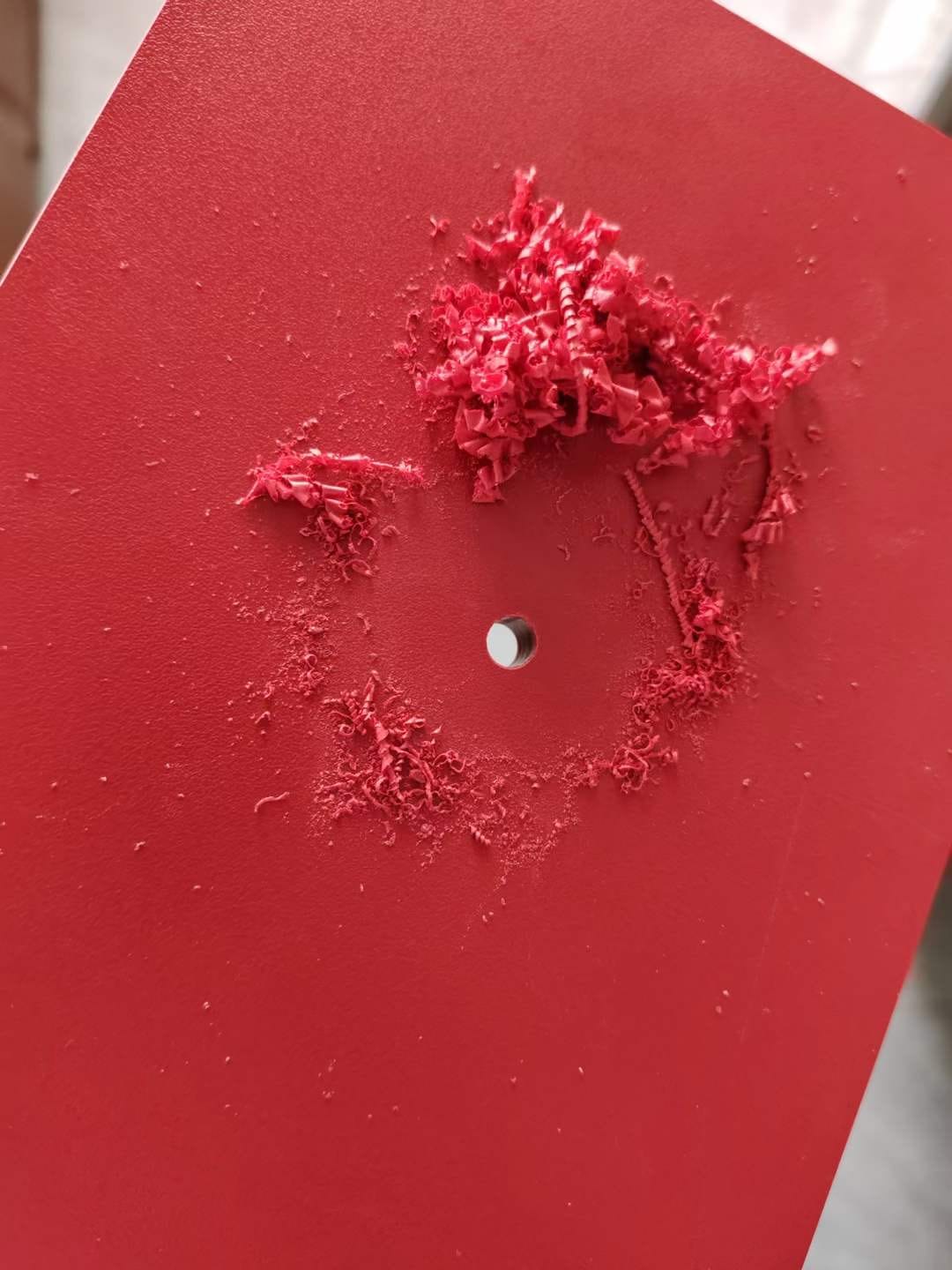
The five candidates
Before the comparison, a note on what these actually are, because two of them get confused constantly.
This sits alongside our main page on compact washroom cubicles, which covers the systems themselves rather than the material behind them.
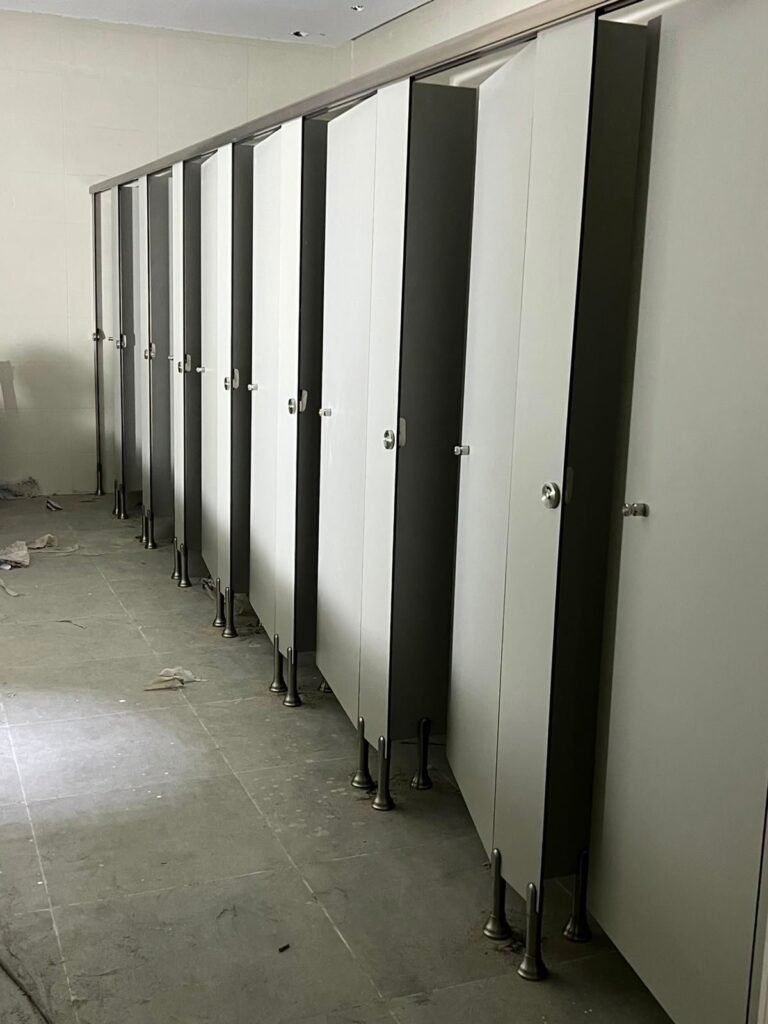
Compact panel
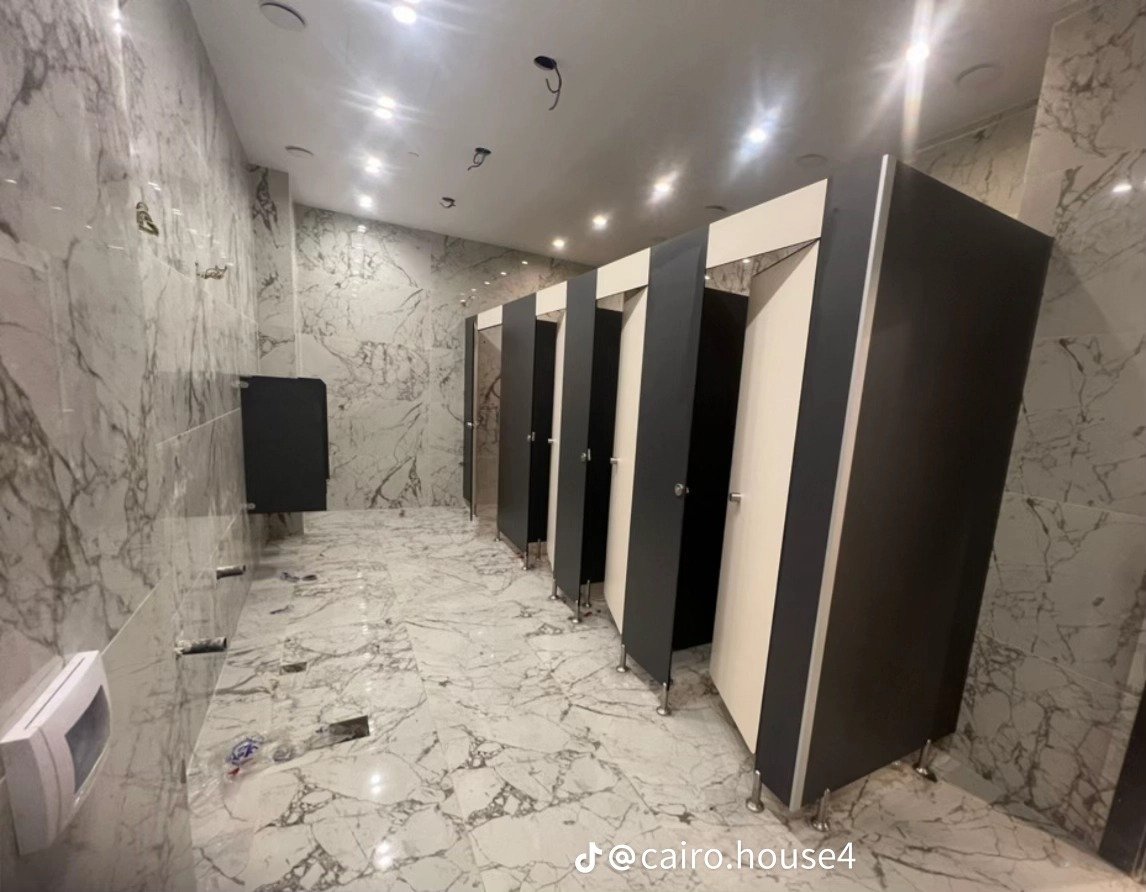
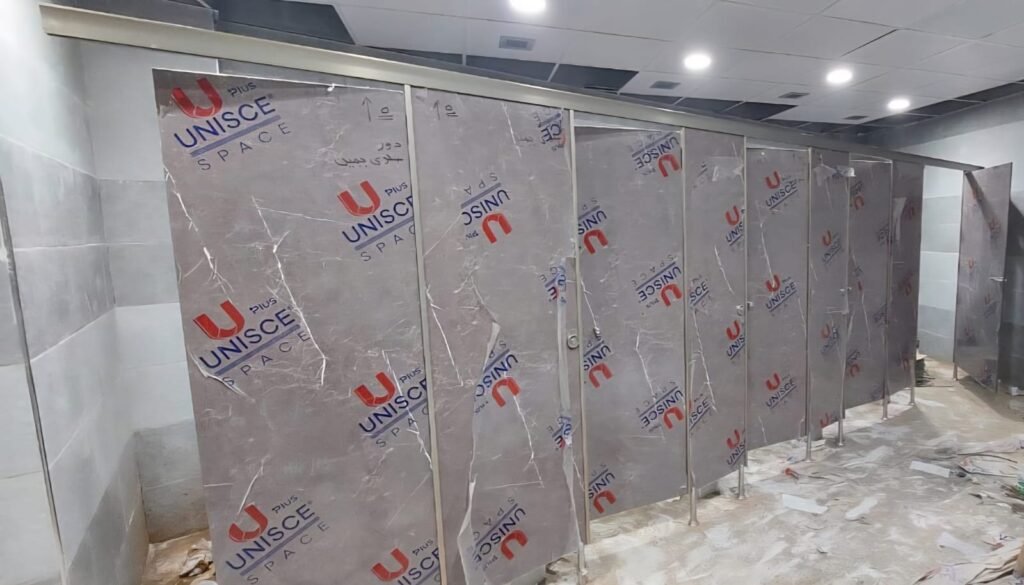
Solid phenolic resin through the full thickness, 12 to 13 mm for cubicles. Structural on its own. No substrate to fail.
Laminated MDF or chipboard
A thin decorative laminate face bonded to a wood based board. This is what most people mean when they say a cheap HPL partition, and it is a different product from the one above.
Solid surface, including Corian
A mineral filled acrylic. Non porous, seamless, and uniquely repairable because damage sands out. Expensive per square metre and at its best on vanity tops and curved work rather than flat cubicle panels.
PVC and extruded plastic
Cheap, light, completely waterproof. Structurally weak and it looks like what it costs.
Powder coated or stainless steel
The traditional institutional answer. Strong, but powder coat chips and the exposed steel underneath then corrodes in a wet environment.
Head to head
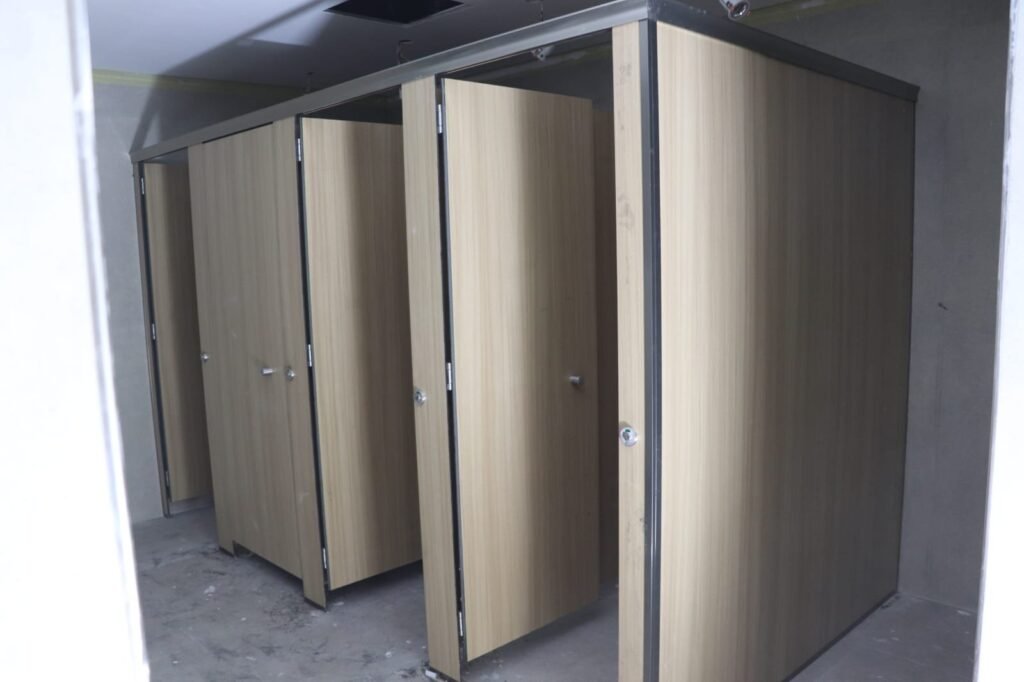
| Compact panel | Laminated MDF | Solid surface | PVC | Coated steel | |
|---|---|---|---|---|---|
| Standing water | No effect | Swells at the edge | No effect | No effect | Corrodes where coating is broken |
| Impact and kicking | Very good | Face cracks, board crushes | Good, marks show | Poor, flexes and cracks | Good, but dents show |
| Strong disinfectant | Tolerates it | Attacks the edge seal | Tolerates it | Can craze over time | Attacks the coating |
| Repairable | No | No | Yes, sands out | No | Touch up only |
| Graffiti removal | Good | Poor | Very good | Poor | Moderate |
| Price per square metre | High | Low | Highest | Lowest | Moderate |
| Realistic service life | Long | Short in a wet room | Long | Short | Moderate |
One row deserves emphasis. Laminated MDF is the only material in that table that fails at the thing a washroom does every single day, which is put water on the floor. Everything else on the list survives it.
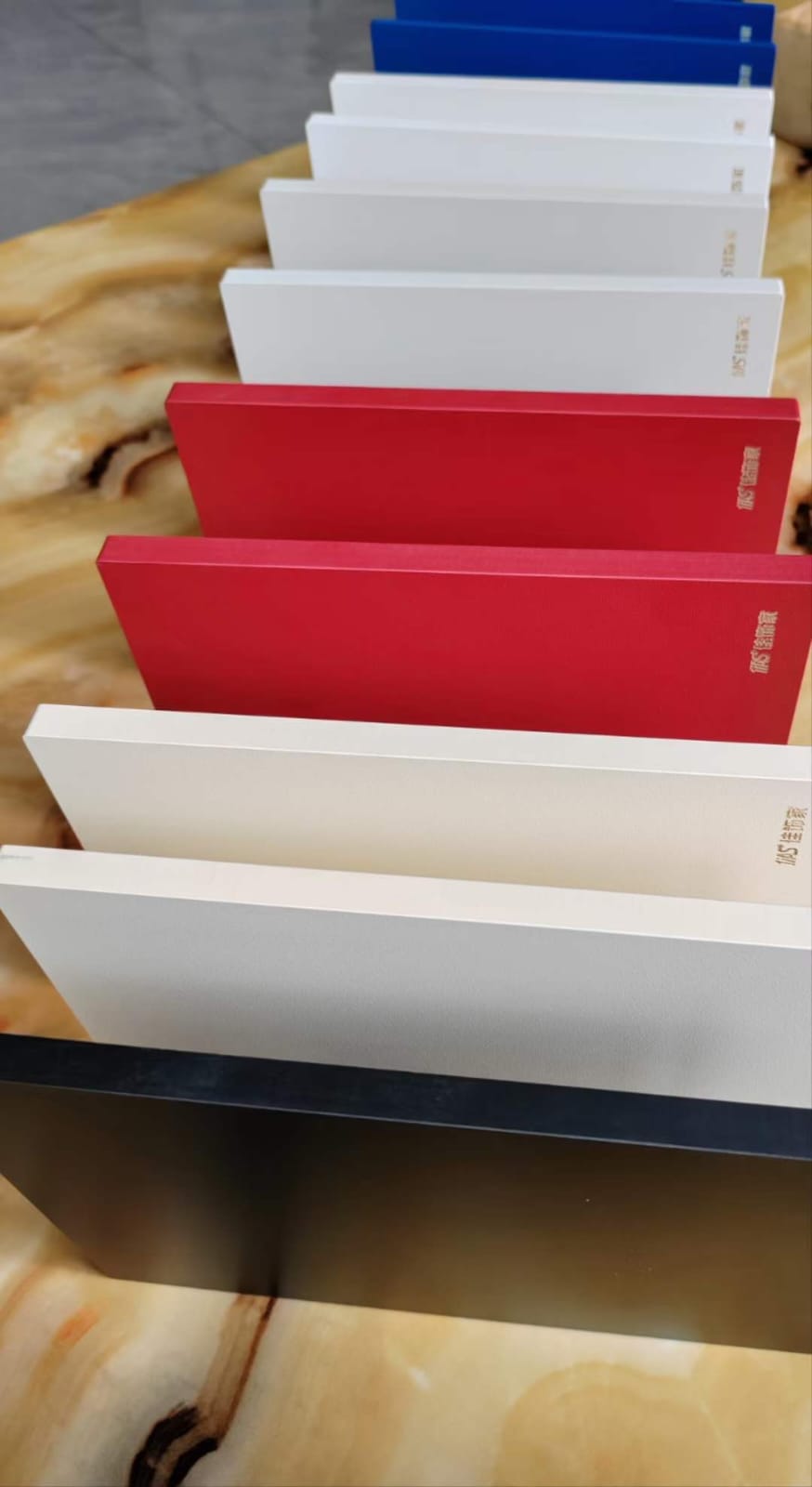
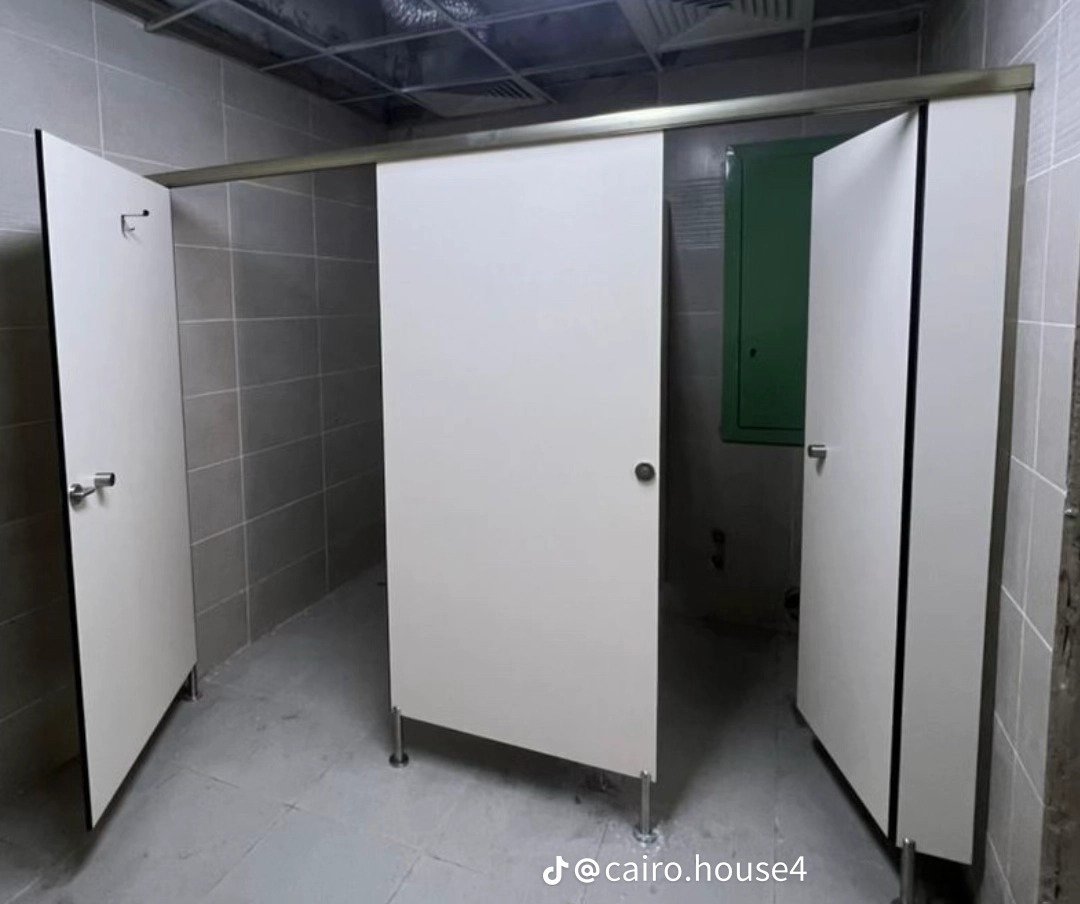
Cost over ten years, not per square metre
This is where the decision usually turns, and it is the calculation nobody publishes.
A laminated board partition installed at roughly a third of the price of a compact one is genuinely cheaper on day one. In a dry, low traffic office washroom with good extract it may well last. In a gym, a factory or a school it does not, and the second installation carries the full cost again plus the disruption of taking the first one out.
Solid surface runs the other way. It is the most expensive to install and the only one you can repair, which makes it rational in a building where a damaged panel must be made good rather than replaced, and irrational in a building where nobody is going to bother.
Compact panel sits where it does because the panel outlasts the hardware. The wear items in a compact cubicle are the hinges, the lock and the feet, and all three are replaceable in an hour without touching the panels. That is a maintenance model rather than a replacement model, and it is the actual argument for the material.
Related reading: Corian and solid surface work and Corian toilet partitions.
Which one for which building
Reduced to the decision, without hedging.
- Gym, sports club or swimming facility: compact panel at 13 mm with 304 stainless hardware. Sweat, chlorine and impact rule out everything cheaper.
- Hospital, clinic or laboratory: compact panel for cubicles, solid surface for vanity tops and anywhere seamless hygiene is specified.
- Factory or industrial changing room: compact panel at 13 mm. Impact and cleaning chemicals are the constraints.
- School or university: compact panel, and specify chamfered edges and vandal resistant hardware.
- Hotel or restaurant: compact panel in a decorative finish, or solid surface where the design calls for seamless curved work.
- Private office with light use and good ventilation: compact panel remains the sensible choice, but this is the one building type where a well specified laminated system can survive.
- Any building where the floor is hosed rather than mopped: compact panel only.
What the brochures claim, and what to actually verify
Every material in that table is sold with the same five adjectives. Waterproof, durable, hygienic, fire resistant and easy to clean. Four of the five mean almost nothing without a number attached.
Waterproof is the one that hides the most. A laminated board with a moisture resistant core is genuinely water resistant at the face and completely vulnerable at the cut edge, which is precisely where standing water sits. Ask what happens at the bottom of a door, not what happens in the middle of a panel.
Fire resistant is a classification, not an adjective. There is a specific rating for the building and either the panel meets it or it does not. A supplier who answers this with a word rather than a document has not checked.
Hygienic usually means non porous, which is a real and useful property. It is not the same as antibacterial, which is a separate treatment and a separate claim that should come with evidence.
Durable is meaningless on its own. The useful question is which component fails first and whether it can be replaced without replacing everything around it. On a compact installation that answer is the hardware, and the answer is yes. On a laminated board installation the answer is the panel, and the answer is no.
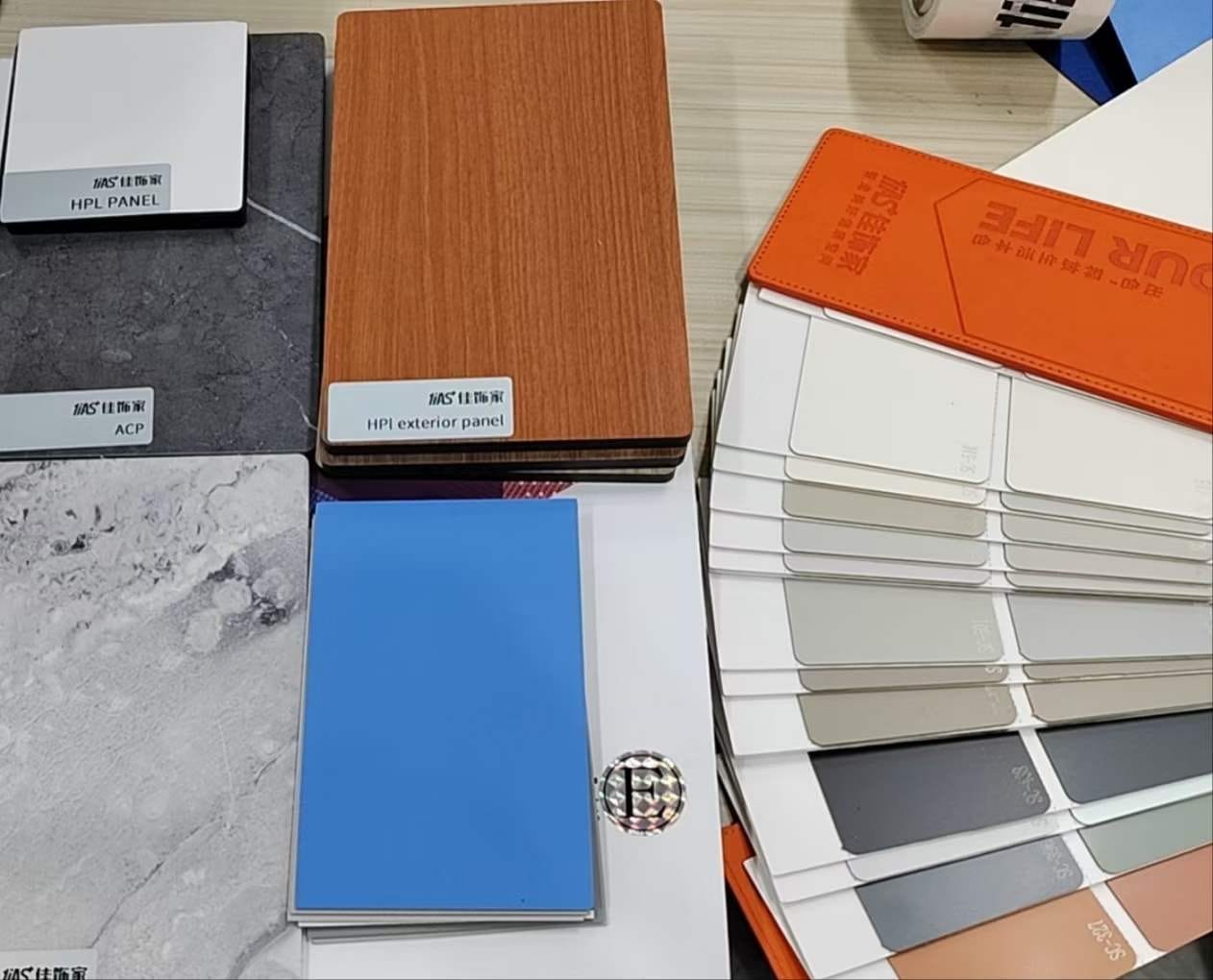
Ask for a test document against EN 438 for whichever panel is being quoted. A supplier who cannot produce one is quoting a panel they have not verified either.
The honest case against compact panel
It is heavy, and on a refurbishment with marginal existing fixings that needs checking rather than assuming.
It cannot be repaired. Deep damage means replacing a panel. In practice the surface is hard enough that this is rare, but it is a real difference from solid surface.
It is not cheap, and pretending otherwise helps nobody. If the budget will genuinely not carry it, a properly specified coated steel system is a more honest recommendation than a laminated board one that will fail inside two years.
It needs correct machining. A chipped edge on a finished sheet cannot be filled, which is why it is cut in a workshop from drawings rather than adjusted on site.
Common questions
Is Corian better than compact panel for bathroom partitions? For flat cubicle panels, no. It costs considerably more and its main advantage, repairability, rarely gets used on a partition. For vanity tops and curved seamless work it is the better material.
Why is one HPL quote a third of the price of another? Almost always because one is solid compact panel and the other is thin laminate on MDF. Ask what the core is. If the answer is not phenolic through the full thickness, it is a different product.
Do stainless steel partitions last longer? Stainless does. Powder coated mild steel does not, because once the coating is broken the steel underneath corrodes in a wet environment. Full stainless is expensive and it shows every fingerprint.
Can I mix materials in one washroom? Yes and it is often the right answer. Compact cubicles with a solid surface vanity top is a common and sensible combination.
What about moisture resistant MDF? It resists moisture at the face. The vulnerable point is the cut edge at the bottom of a door, and that is exactly where standing water sits. It postpones the problem rather than solving it.
Which material handles graffiti best? Solid surface, because it sands out completely. Compact panel is second and cleans well with solvent because the surface is closed and non porous.
Not sure which one your building needs
Tell us the building type, the cleaning regime and the budget and we will tell you which material makes sense, including when the answer is not the one we sell most of.
We work across the city, including offices in Mohandessin, clinics and practices in Dokki and refurbishment work in Garden City. Full list on our home page.
كايرو هاوس – قواطيع حمامات كوريان و كومباكت HPL و ارضيات مرتفعة
Phone +201066672094
Email info@cairohouseeg.com
3 Misr Lel Tayaran Street, Block 1314, Civil Aviation Buildings, next to Sindbad, El Nozha El Gedida, Cairo