
Phenolic Resin and Compact HPL Panels in Cairo
Phenolic resin is the reason a compact HPL panel behaves the way it does. It is not a coating and not a brand, it is the thermosetting resin that the kraft paper layers are saturated in before they are pressed. Understanding it is the fastest way to judge whether a panel you are being quoted is genuine compact grade or a laminate pretending to be one. This page explains the material, what it does under heat and pressure, and how we specify it for washroom projects across Cairo.
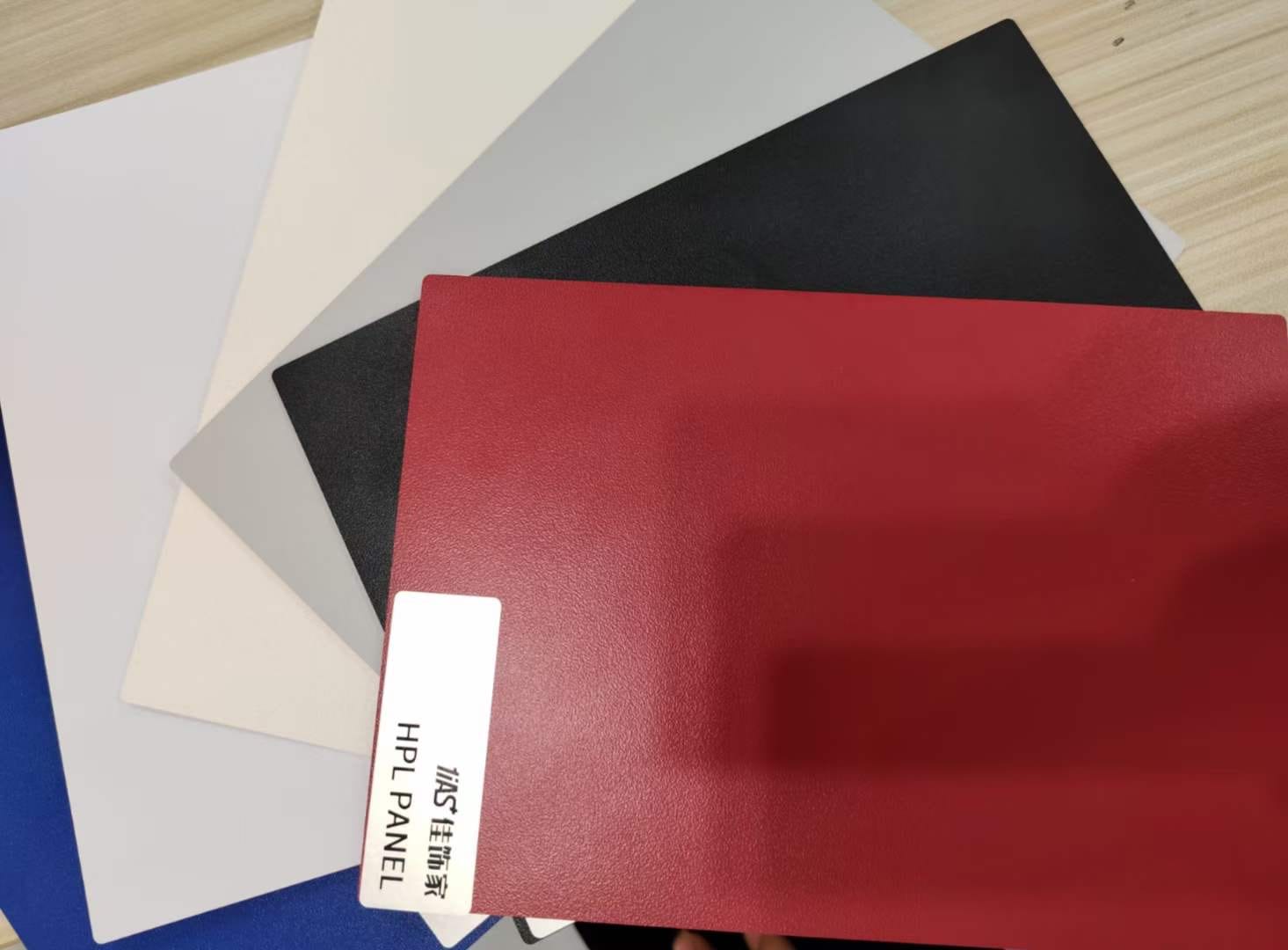
What phenolic resin actually is
Phenolic resin is produced from a reaction between phenol and formaldehyde. What matters commercially is that it is thermosetting rather than thermoplastic. A thermoplastic softens again every time you heat it. A thermoset does not. Once phenolic resin has cured under heat and pressure it has cross linked into a rigid network that cannot be melted back, which is why a finished compact panel does not deform in a hot washroom and does not soften where a hot pipe runs behind it.
In Arabic the material is called راتنج الفينول, and the panels made from it are sold as كومباكت HPL. Those two terms describe different things and it is worth keeping them apart when you are comparing quotations. The resin is the binder. The panel is the product.
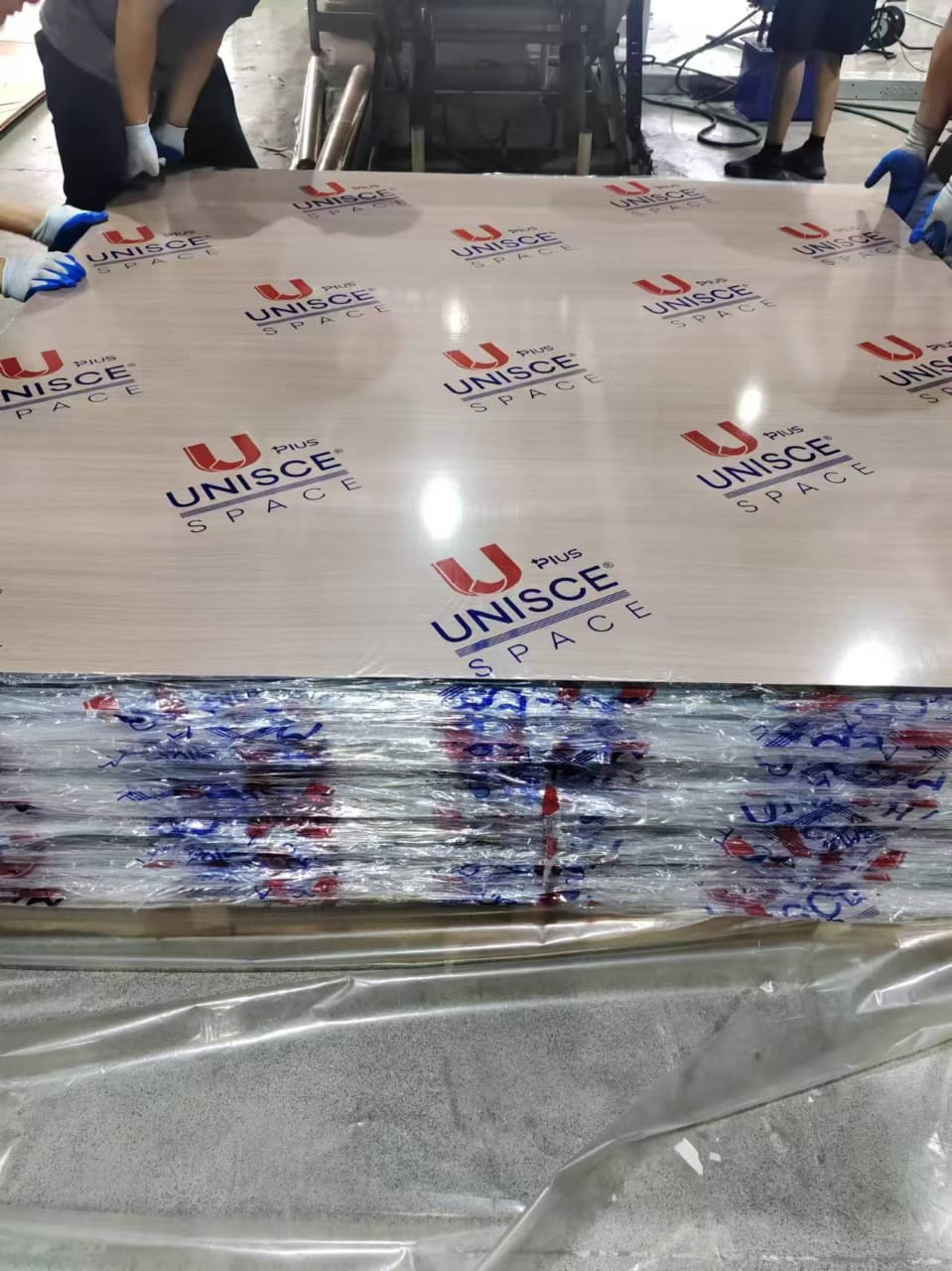
The manufacturing sequence is simple to describe and difficult to fake. Sheets of kraft paper are drawn through a bath of phenolic resin until saturated, then dried. Those saturated sheets are stacked, a decorative layer and an overlay are placed on the outer faces, and the whole stack goes into a press at roughly 140 to 150 degrees Celsius under pressure in the region of 90 bar. The resin flows, cures and fuses the stack into one homogeneous slab. There is no glue line holding a face onto a core, because there is no separate core.
Why the resin decides the panel performance
| Property | What the phenolic resin is responsible for |
|---|---|
| Water resistance | The cured resin fills the paper structure, so there is no open fibre for water to travel along. Water resistance runs through the full thickness rather than sitting on the surface. |
| Dimensional stability | A thermoset does not re-soften, so the panel holds its shape through heat and humidity cycles instead of creeping. |
| Impact strength | The cross linked network distributes load through the slab rather than concentrating it at a bond line. |
| Machinability | The board can be cut, drilled and edge finished like a solid material, which is what allows fabrication to the surveyed opening. |
| Chemical resistance | Cured phenolic tolerates the commercial disinfectants used in daily washroom cleaning without softening or hazing. |
| Fire behaviour | Phenolic systems char rather than melt and drip, which is why they are specified in public buildings. |
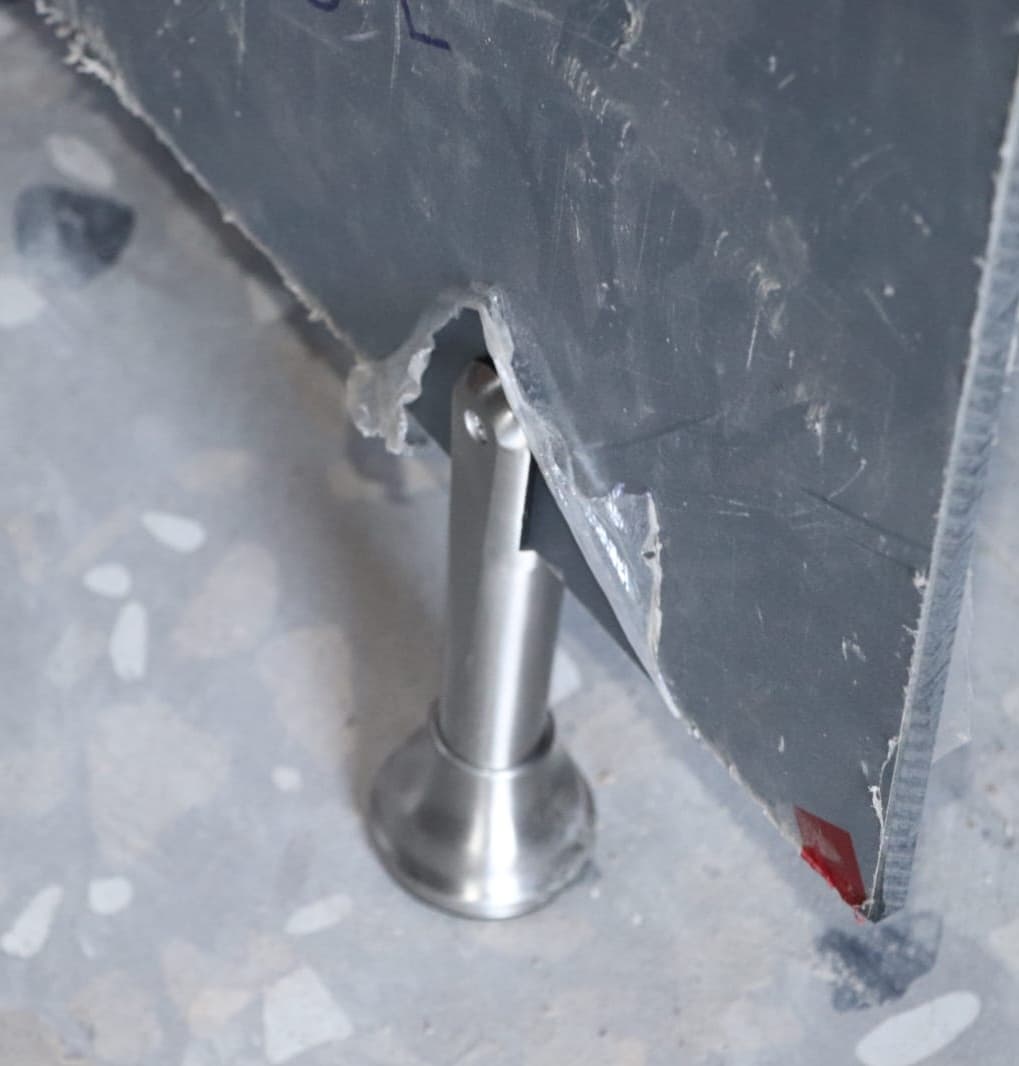
| Colour depth | The dark brown core seen at a cut edge is the cured resin itself, which is how you identify a genuine compact panel. |
| No delamination | With no separate face bonded to a substrate, there is nothing available to peel or lift at the edge. |
How to tell a real phenolic compact panel from a laminate
Most of the disappointing washrooms we are asked to replace were built with a decorative laminate bonded to a particle or timber core, sold as though it were compact. The two look similar once installed and behave completely differently after two seasons. These are the checks worth making before you sign a purchase order.
The edge test
Cut or look at a raw edge. A genuine compact panel shows a dense, uniform dark brown core, which is the cured phenolic. A laminate over chipboard shows particles. This is the single fastest check on site.
The weight test
Compact HPL is heavy for its thickness because the paper is fully saturated and compressed. A panel that feels light for 12mm is usually not what it claims to be.
The water test
Stand an offcut in water overnight. A compact panel is unchanged. Anything with an absorbent core swells at the bottom edge, which is exactly the failure you see in old Cairo washrooms.
Thickness honesty
Ask for measured thickness, not nominal. We check panels with a caliper before supply because a board sold as 12mm that arrives at 10mm changes both the price and the performance.
Certification
Ask what standard the panel is manufactured to and request the documentation. If a supplier cannot produce it, you are buying on trust alone.
Grade for the application
Interior compact and exterior compact are different products. Exterior grade carries additional UV protection. Using the wrong one outdoors is a slow, expensive mistake.
Where we use phenolic compact panels
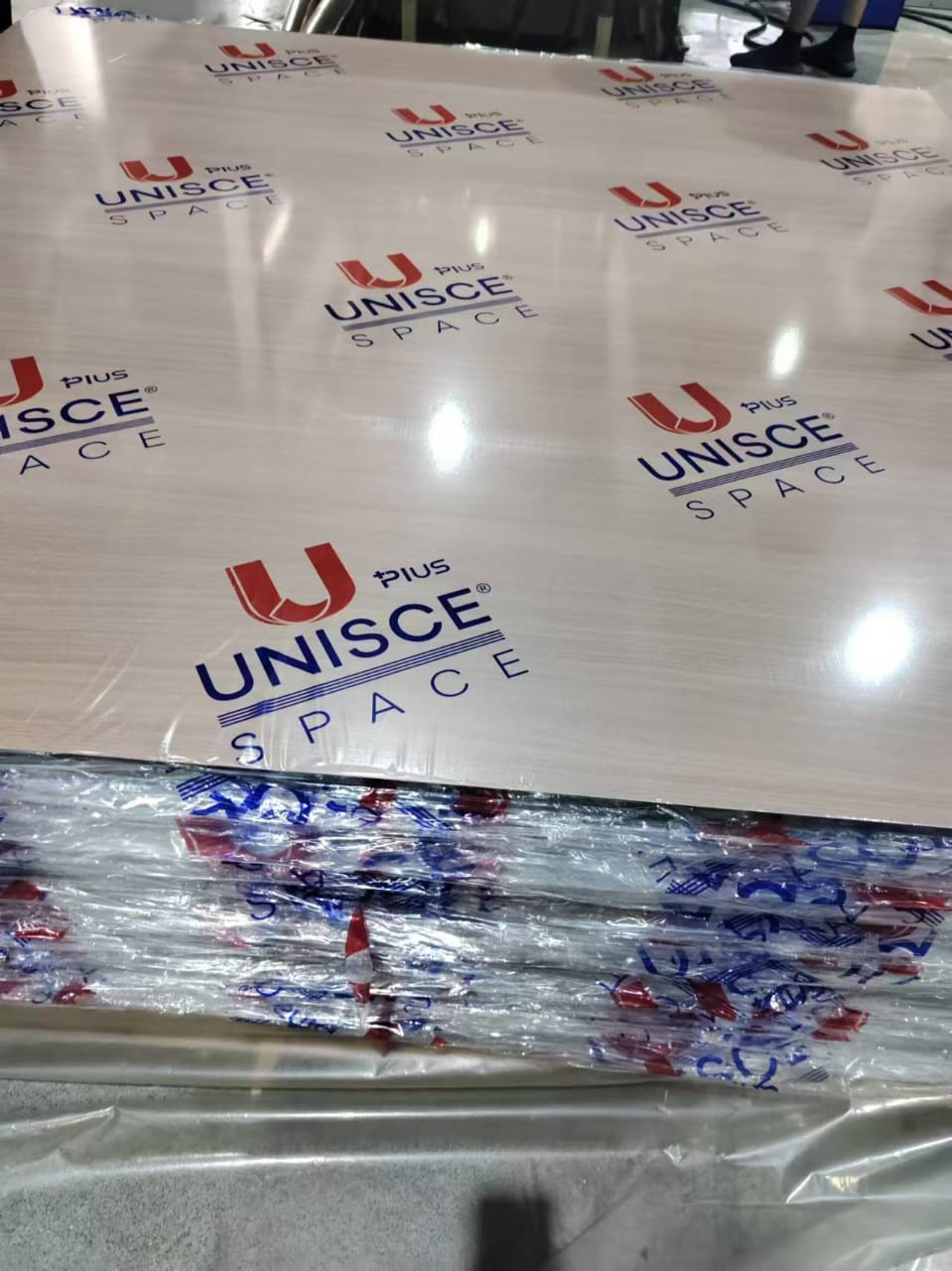
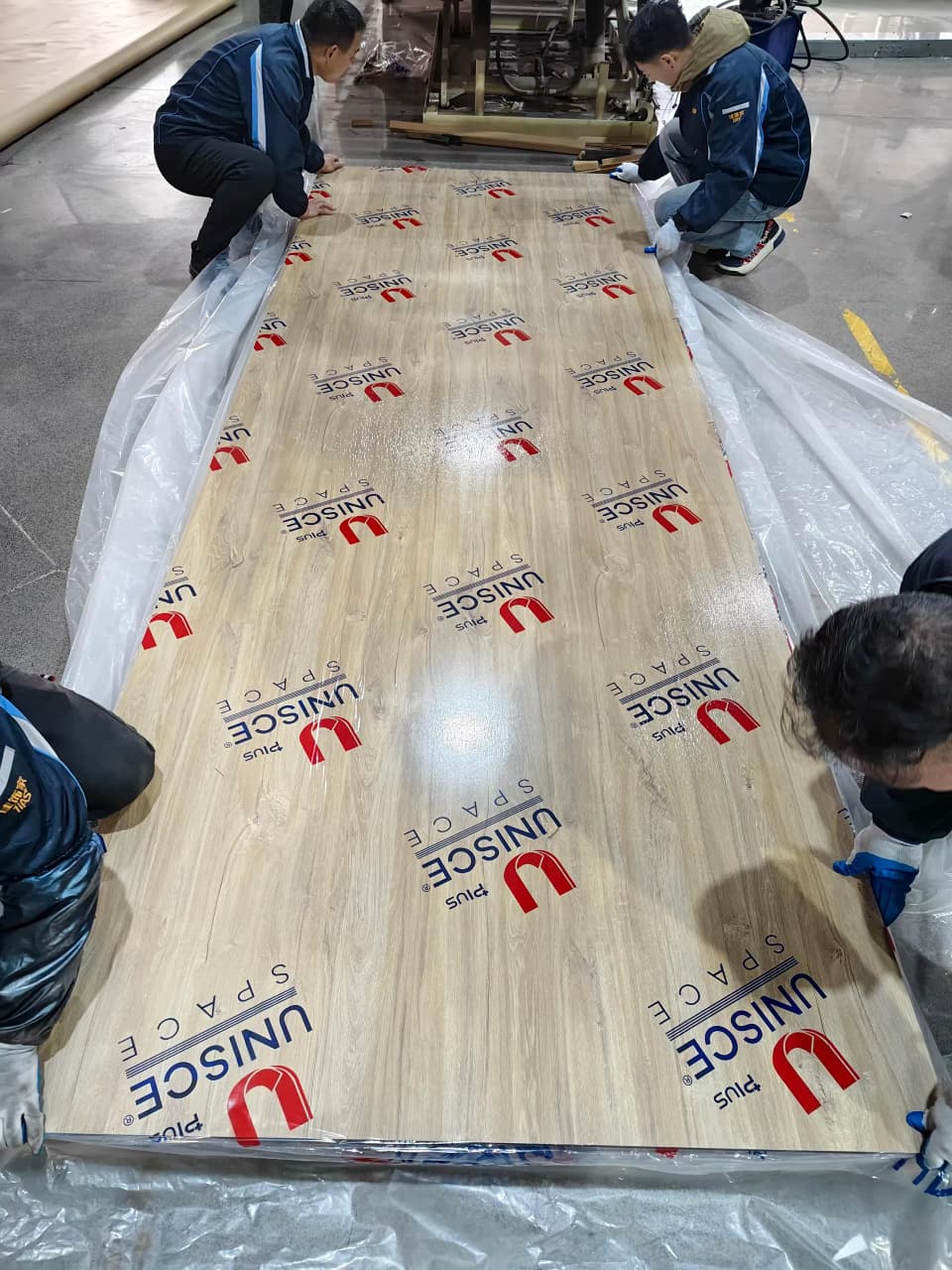
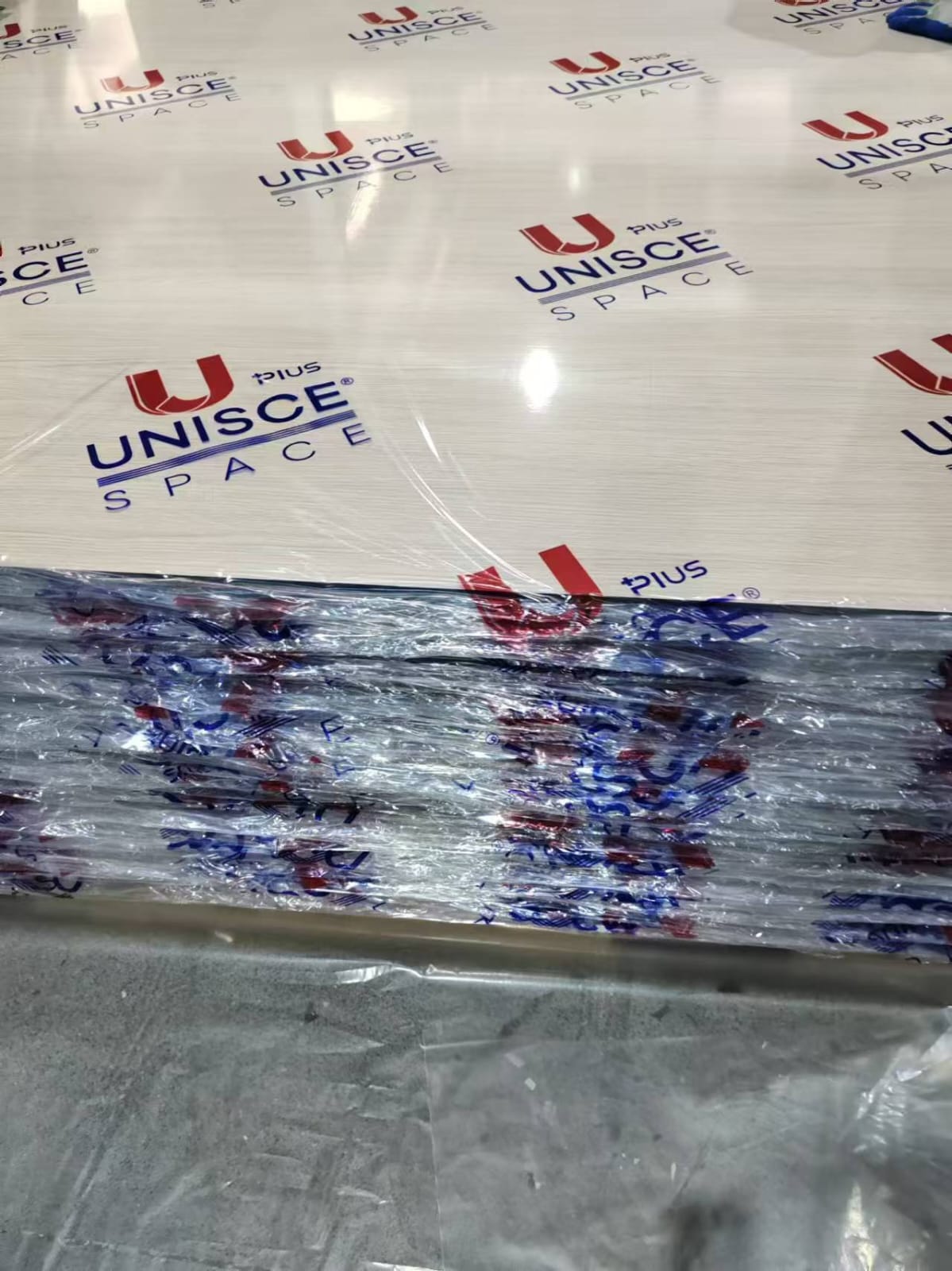
كايرو هاوس – قواطيع حمامات كوريان و كومباكت HPL و ارضيات مرتفعة is the exclusive agent in Egypt for UNISCE compact HPL panels, and every product below is fabricated from the same phenolic compact board. We supply and fit with our own teams rather than subcontracting the installation.
Toilet partitions
Cubicle runs cut from phenolic compact board where the door edge is the same cured material as the face. See compact HPL toilet partitions.
Shower cubicles
Wet area enclosures where permanently saturated conditions are the normal duty rather than an exception. See shower cubicles in the same panel.
Lockers and benches
Changing room units built from the same slab, so standing water is a non issue. See compact HPL lockers.
Worktops and vanities
Counter surfaces that take daily chemical cleaning without a laminated edge lifting at the front. See compact panel worktops.
Wall cladding
Full height lining that removes grout lines from the wet wall entirely. See HPL wall cladding.
Stainless hardware
Phenolic panels paired with stainless steel 304 fittings, because the panel outlasts any plated fitting. See the stainless partition hardware.
The Arabic terminology, so nothing is lost in translation
Most of this market is bought and specified in Arabic, and the words do not map one to one onto the English. If you are briefing a contractor, sending a WhatsApp enquiry, or comparing quotations from several suppliers, these are the terms that matter and what each one actually refers to.
| المصطلح بالعربية | English | What it refers to |
|---|---|---|
| راتنج الفينول | Phenolic resin | The thermosetting resin itself, the binder that saturates the kraft paper. |
| كومباكت HPL | Compact HPL | The finished solid panel pressed from resin saturated paper. |
| قواطيع حمامات | Bathroom partitions | The cubicle system as a product category, the term most people actually search. |
| فواصل حمامات | Bathroom dividers | Used interchangeably with قواطيع حمامات by many buyers and suppliers. |
| ألواح كومباكت | Compact panels | The sheets before fabrication, sold by size and thickness. |
| كوريان | Corian, solid surface | A different material entirely, acrylic based, not phenolic. Worth not confusing. |
| ارضيات مرتفعة | Raised access floors | A separate system, often specified on the same project. |
| استانلس ستيل 304 | Stainless steel 304 | The hardware grade that survives a humid washroom. |
If you would rather discuss the project in Arabic, that is how we work every day. Send the drawings or the cubicle count in Arabic and you will get the quotation back the same way. You can also review our full product range or look at recent project photos from washrooms across Cairo.
How we specify phenolic panels for a project
Specification is mostly a series of small decisions that are cheap to get right at the start and expensive to revisit once panels are cut.
- Confirm the duty. A staff washroom, a public mall floor and a wet changing room are three different loads. This decides thickness before anything else is discussed.
- Set the thickness. 12mm covers offices, clinics and restaurants. 13mm is specified where the washroom is genuinely public and takes all day footfall.
- Choose interior or exterior grade. Interior compact is correct for washrooms. Exterior grade with UV protection is a different product and is only needed where panels see direct sun.
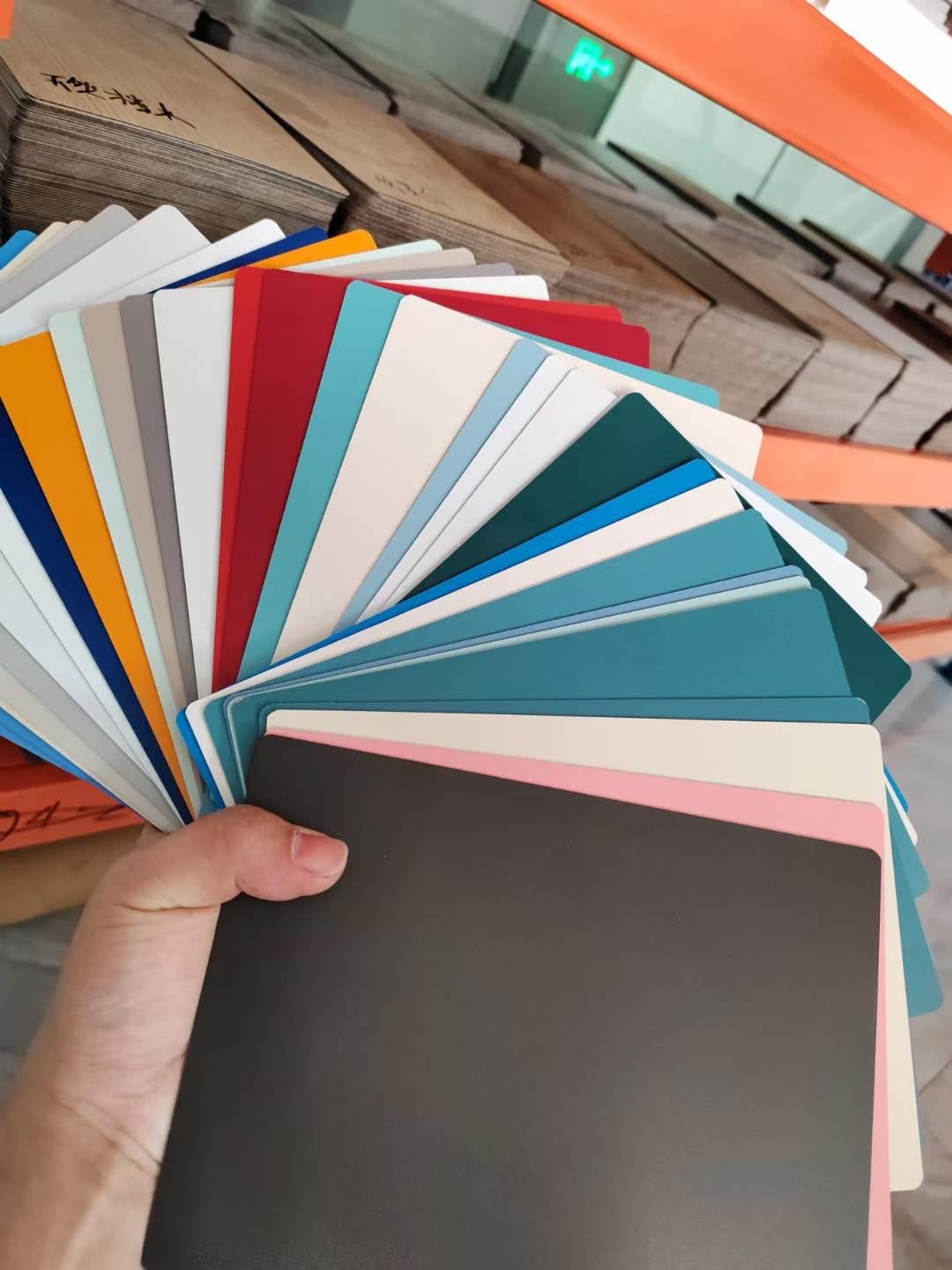
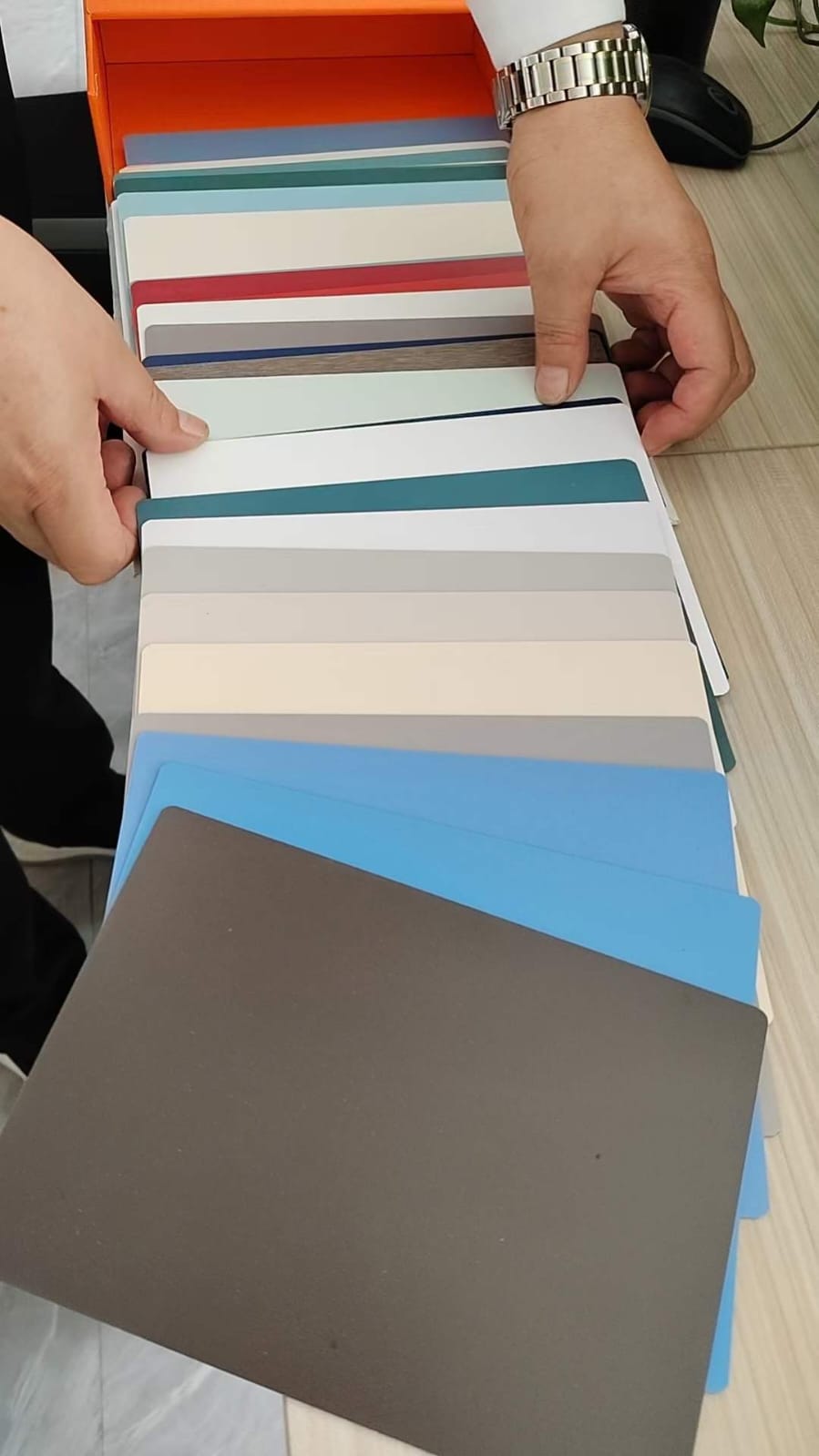
- Approve the finish against the room. Solid colours, wood grains and stone textures behave differently under the actual lighting, so colour is signed off on site with the swatch fan rather than from a screen.
- Fix the hardware specification. Stainless steel 304 hinges, indicator locks, brackets, pilaster shoes and coat hooks, supplied as one matched set with spares.
- Survey then fabricate. Panels are cut to the measured opening after screed and render, never to the drawing, which is what keeps door gaps even on a real building.
Find Us on Google Maps
Frequently Asked Questions
Is phenolic the same thing as compact HPL? No, and the distinction is useful. Phenolic resin is the material that saturates the kraft paper. Compact HPL is the finished panel pressed from that saturated paper. In Arabic, راتنج الفينول is the resin and كومباكت HPL is the panel.
Why does the panel edge look dark brown? That is the cured phenolic resin running through the core. It is the clearest visual confirmation you are holding a genuine compact panel rather than a laminate bonded to a substrate.
Is phenolic compact waterproof or just water resistant? It is waterproof through its full thickness rather than surface treated. There is no absorbent core, so standing water and constant humidity have nothing to soak into. This is the property that decides washroom service life.
Does phenolic resin release formaldehyde in the finished panel? The resin is produced from a phenol formaldehyde reaction, but the formaldehyde is consumed during curing. Certified panels are manufactured and tested against emission standards, and we can provide the product documentation on request.
How does phenolic compact behave in a fire? Phenolic systems char rather than melt and drip, which is why they appear in public building specifications. If your project is being reviewed against a specific fire classification, tell us at survey and we will confirm what the panel is rated to before you commit.
Can phenolic panels be used outdoors in Cairo? Only exterior grade, which carries additional UV protection. Standard interior compact will fade under direct Egyptian sun. Using the wrong grade outdoors is the most common specification error we are asked to fix.
What thickness of phenolic compact should a washroom use? 12mm for offices, clinics and restaurants. 13mm for genuinely public high traffic washrooms such as malls, campuses and transport buildings. We will tell you which your actual footfall justifies rather than defaulting to the thicker board.
Can you supply the panels only, without installation? Yes. We supply sheets cut to size as well as full supply and fit. If you have your own fitting team we will still survey and cut to the measured opening, because that is where most washroom installations succeed or fail.
Get a quote or a sample
Send the washroom layout, or simply the cubicle count and rough dimensions, and we will come back with an itemised quotation showing panel, hardware and installation separately.
If you want to see and handle the material before deciding, our workshop in El Nozha El Gedida is open around the clock and we keep cut samples on hand. To arrange a site survey, call or message us any time.
Phone: +201066672094 or +201223111265
Website: cairohouseeg.com
Hours: Open 24 hours, 7 days a week
Address: 3 Misr Lel Tayaran Street, Block 1314, Civil Aviation Buildings, next to Sindbad, El Nozha El Gedida, Cairo 11843